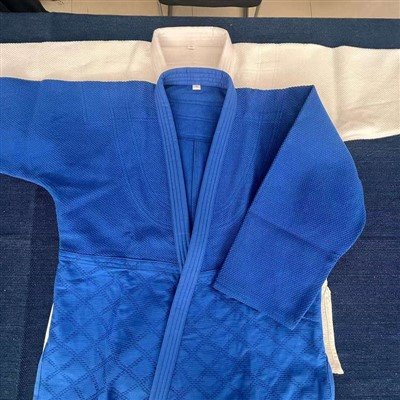
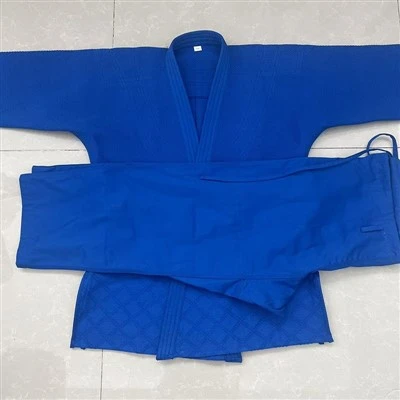
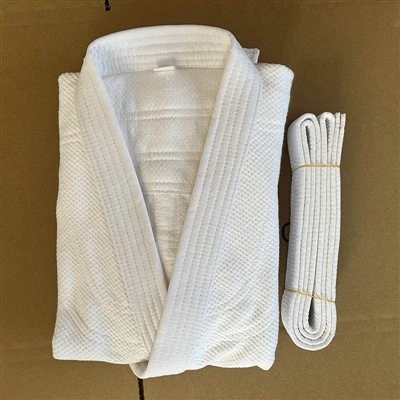
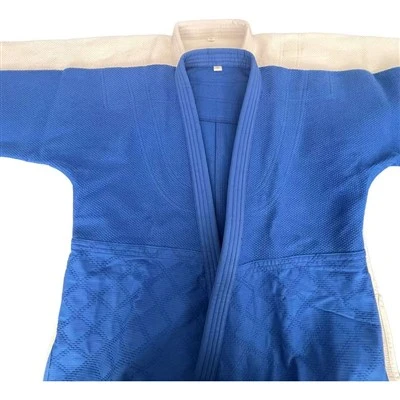
As the iconic equipment of judo, judo uniforms carry the profound cultural heritage of this ancient martial art, and are also constantly innovating with the development of modern sports technology. From the initial functional clothing to today's sports equipment that combines traditional aesthetics with modern performance, the evolution of judo uniforms reflects the general law of the development of sports equipment.
Traditional judo uniforms are made of 100% cotton, a choice that stems from the special requirements of judo for clothing. Pure cotton fabrics have good sweat absorption and breathability, and can keep the body dry during intense exercise. At the same time, cotton fabrics will have moderate ductility when subjected to force, which not only ensures the flexibility of the movement, but also can withstand the pulling force caused by technical movements such as throws. The standard judo uniform consists of three parts: a top, pants and a belt. The top is usually wider than ordinary clothes. This design is not only convenient for the opponent to grasp, but also reflects the judo philosophy of "using softness to overcome hardness".
Modern technology is injecting new vitality into traditional judo uniforms. The application of new blended fabrics has significantly improved the performance of judo uniforms. For example, adding a small amount of polyester fiber to cotton fabric can enhance the wear resistance and wrinkle resistance of clothing; specially treated cotton yarn can improve the elastic recovery ability of fabrics. In terms of production technology, the application of three-dimensional cutting technology makes judo uniforms more fit the curve of the human body, which does not hinder movement and reduces wind resistance during exercise. Some high-end judo uniforms also use antibacterial and deodorizing treatment technology, which effectively solves the hygiene problem after high-intensity exercise.
From a cultural perspective, judo uniforms carry rich symbolic meanings. The color system of the belt intuitively shows the level of the practitioner, while the dojo logo or personal name that may be embroidered on the clothing reflects the importance of judo to traditional etiquette. In international competitions, the unified standard of judo uniforms ensures the fairness of the competition and also becomes an important carrier for promoting judo culture.
With the global development of judo, the judo uniform market has shown a diversified trend. Practitioners in different regions have different preferences for clothing, which provides innovative space for the design and production of judo uniforms. In the future, how to further improve functionality while maintaining traditional characteristics will be an important direction for the development of judo uniforms.