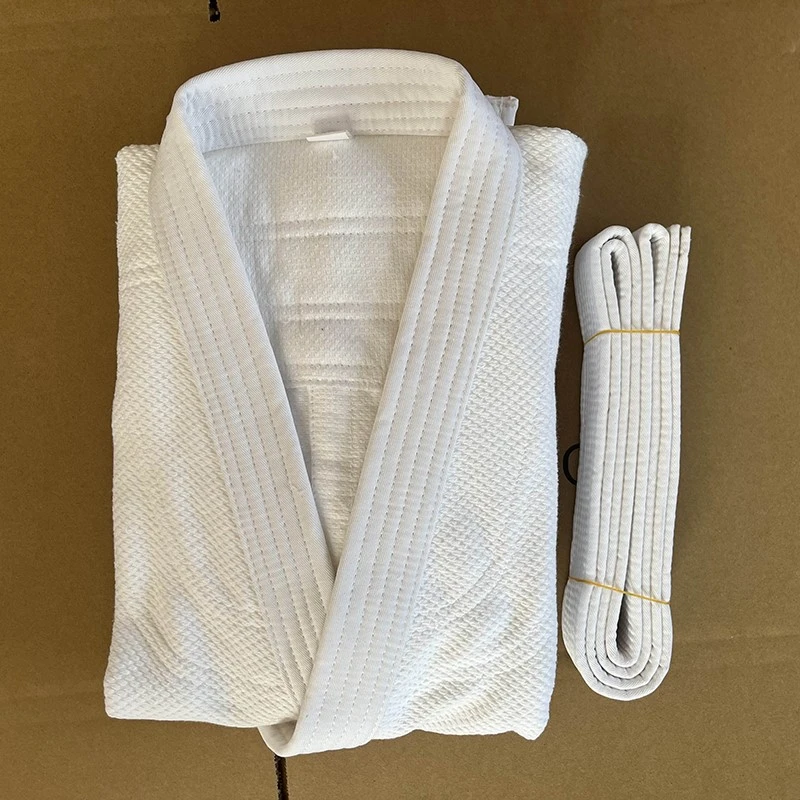
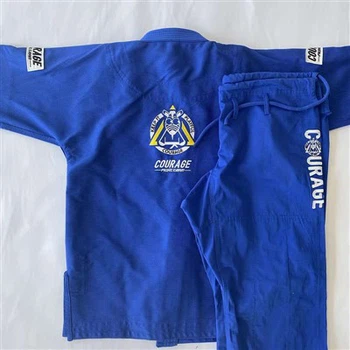
As a combat sport that emphasizes skills and strength, judo's equipment, judogi, is not only a must-have for competition and training, but also an important factor affecting technical performance. Understanding the characteristics of judo uniforms and mastering relevant skills can help athletes perform more efficiently in competitions while reducing the risk of injury.
First, the material and design of judo uniforms directly affect their durability and grip performance. High-quality judo uniforms are usually made of thick, wear-resistant cotton fabrics, which not only ensure flexibility but also withstand high-intensity pulling. The sleeves and trouser legs are usually wider than ordinary clothes, which is convenient for opponents to grasp and also provides more room for technical movements. Athletes should choose judo uniforms that suit their body shape during training. Too tight or too loose will affect the smoothness of movements.
Secondly, the way judo uniforms are worn also directly affects competition performance. The correct wearing method can ensure that the clothes fit the body and avoid affecting technical movements due to loose clothes during confrontation. For example, the collar should fit the neck flat, and the cuffs and trouser legs should not be too long to avoid being caught by the opponent and affecting the balance. In addition, the obi (belt) of the judo uniform not only symbolizes the rank, but is also an important part of fixing the clothes. Tightening the belt can prevent the clothes from shifting during fierce confrontation.
On the technical level, the characteristics of the judo uniform directly affect the execution of throws, locks and other movements. For example, in throws (nage-waza), athletes can use the gripping points of the sleeves and lapels to apply leverage to complete the movements more efficiently. In locks (katame-waza), the friction of the judo uniform can help fix the opponent's body and enhance the control effect. Therefore, athletes need to practice repeatedly and become familiar with how to use the characteristics of the judo uniform to enhance technical performance.
Finally, the maintenance of the judo uniform is equally important. Regular cleaning and drying can extend the service life of the judo uniform while maintaining its friction and breathability. Sweat stains should be cleaned in time after training to prevent the fabric from becoming hard or moldy due to long-term moisture.
In short, judo uniforms are not only equipment for competitions, but also a key factor in the performance of skills. Mastering the selection, wearing and maintenance techniques of judo uniforms can help athletes achieve better performance in training and competitions.