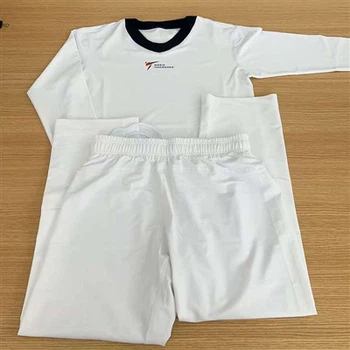
As the core equipment of judo, judo uniforms not only carry the sweat and skills of athletes, but also contain profound cultural connotations. From its design to its use, every detail reflects the inheritance of Japanese martial arts spirit and traditional values.
Judo uniforms were first designed by Jigoro Kano in the late 19th century to provide safe, comfortable and technically convenient clothing for judo practitioners. Its loose cut and durable material not only adapt to the throwing, locking and choking techniques in judo techniques, but also symbolize the judo philosophy of "using softness to overcome hardness". Judo uniforms are usually made of high-strength cotton cloth, which is specially treated to enhance wear resistance and tear resistance to ensure that they remain intact in fierce confrontation.
From a cultural perspective, judo uniforms are a symbol of the spirit of Japanese martial arts. It is not just a piece of sportswear, but also a manifestation of identity. In judo training and competitions, wearing judo uniforms is not only a respect for the opponent, but also a reflection of one's own practice. The color system of the belt (obi) of the judo uniform, from white for beginners to black belt for high-level, intuitively shows the growth process of the practitioner and embodies the "step-by-step" practice philosophy.
In addition, judo uniforms also play an important role in international communication. As judo becomes an official Olympic event, judo uniforms are gradually accepted by athletes and enthusiasts around the world. It is not only an output of Japanese culture, but also a bridge for cross-cultural communication. Judo clubs in many countries emphasize the standard wearing of judo uniforms in training to cultivate students' discipline and respect for tradition.
In today's globalization, the design of judo uniforms is also constantly innovating. Modern judo uniforms use lighter and more breathable fabrics on the basis of maintaining traditional tailoring to adapt to the training needs under different climatic conditions. However, no matter how the design changes, the core cultural value of judo uniforms has never changed-it is still a symbol of martial arts spirit, respect and practice.
For foreign trade practitioners, understanding the cultural significance of judo uniforms will help to better promote this product. Whether it is for professional athletes or martial arts enthusiasts, emphasizing the cultural heritage behind the judo uniform can add unique value to it and promote its acceptance and recognition in the international market.