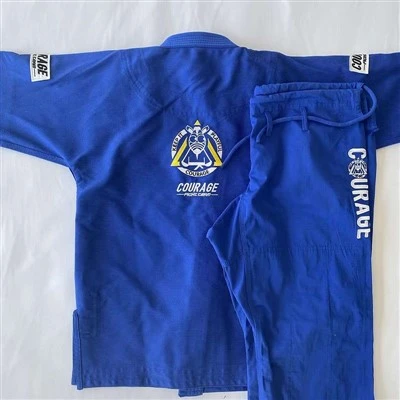
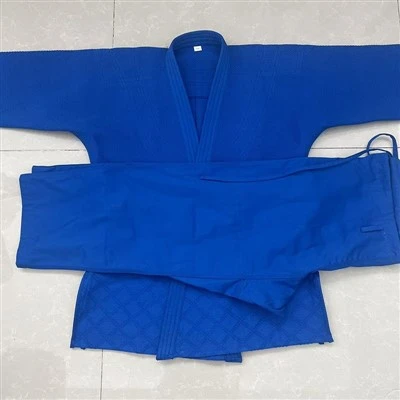
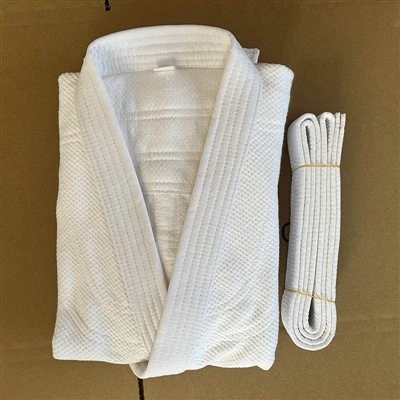
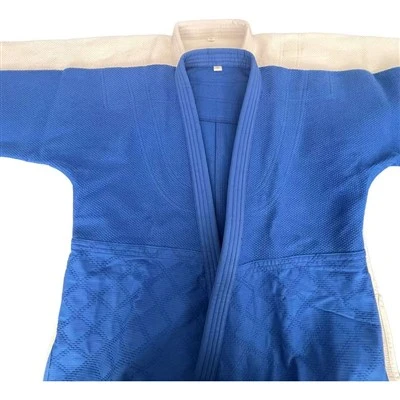
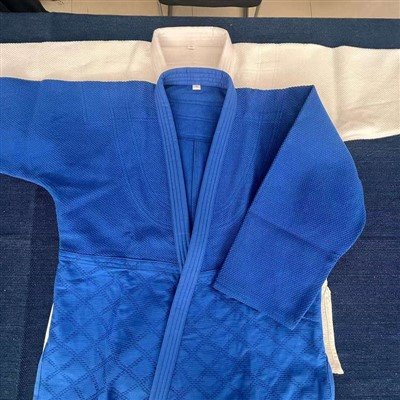
As an important equipment in martial arts training and competition, the manufacturing process of karate uniforms directly affects the comfort, durability and functionality of wearing. With the popularity of karate sports around the world, the demand for uniforms continues to grow, and its molding process is gradually developing towards refinement and standardization. This article will analyze the core molding process of karate uniforms from the perspective of fabric selection, cutting technology, sewing technology and finishing.
Fabric selection is the basis
Karate uniforms usually use high-density cotton or cotton-polyester blended fabrics to ensure breathability, sweat absorption and tear resistance. High-quality fabrics must have a stable shrinkage rate to avoid deformation after washing. Some high-end products will add a small amount of elastic fiber to improve mobility while keeping the shape crisp. The fabric weight is generally between 200-300 grams per square meter, taking into account the needs of lightness and durability.
Three-dimensional cutting improves fit
Traditional flat cutting can easily cause uniforms to shift during intense exercise, and modern technology often uses three-dimensional cutting technology. Through ergonomic data modeling, the waistline, armholes and trouser leg curvature of the uniform are accurately calculated to ensure that they fit the body curve during movement. The collar, cuffs and other friction-prone areas are designed with double-layer edging to reduce wear.
Seamless splicing and reinforced sewing
Key stress-bearing areas such as shoulders and knees need to be reinforced with "backstitching" or "chain stitching" to prevent open lines. Some manufacturers have introduced seamless hot pressing technology to reduce seam friction and improve wearing comfort. The installation of accessories such as belt buckles and armbands requires pre-positioning and punching to ensure symmetry and firmness.
Finishing determines the quality of the finished product
The finished garment needs to be pre-shrunk to avoid subsequent deformation. High-temperature ironing and shaping can enhance the wrinkle resistance of the fabric and make the seams smoother. Some products will be treated with water-repellent to adapt to diverse training environments. The final product needs to pass tensile testing and color fastness testing to ensure that it meets the equipment standards of the International Karate Federation (such as WKF).
As the concept of environmental protection becomes more popular, the application of bio-based fibers and recyclable fabrics is gradually increasing. In the future, intelligent cutting and digital quality inspection technology may further optimize production efficiency and promote the upgrading of karate uniform technology.