Karate is a martial arts sport originated in Japan. Its uniforms (gi) are not only a symbol of identity for practitioners, but also directly affect the comfort and performance of training. For foreign trade practitioners or karate enthusiasts, it is very important to understand the selection and maintenance methods of karate uniforms. This article will introduce the materials, styles and daily maintenance skills of karate uniforms in detail to help users better choose and use gis.
Material selection of karate uniforms
Karate uniforms are usually made of cotton or cotton and linen blended fabrics, which have the characteristics of good breathability, strong sweat absorption and wear resistance. High-quality gis will use high-count pure cotton fabrics to ensure softness and comfort while not easy to deform. Beginners can choose thinner gis for easy movement; while high-level practitioners or competitors may prefer thicker gis to enhance durability.
In addition, some high-end gis will use special processing, such as anti-shrinkage and anti-fading technology, to extend the service life. For the foreign trade market, understanding the preferences of different countries for the materials of gis (e.g. the European market pays more attention to environmental certification, while the Asian market pays more attention to cost-effectiveness) helps to accurately locate customer needs.
Style and wearing standards of gis
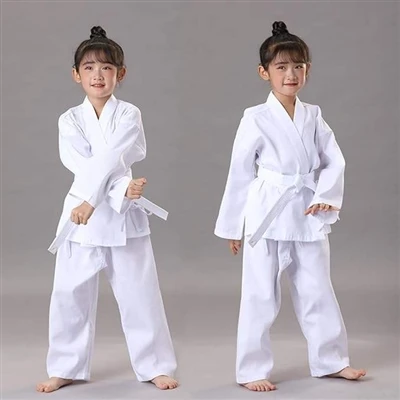
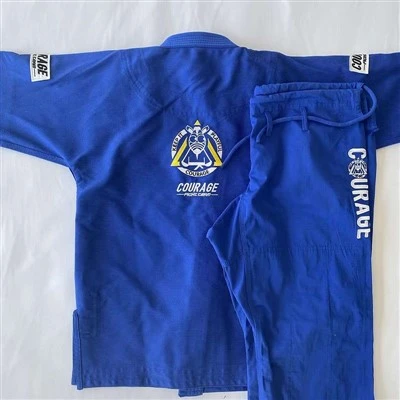
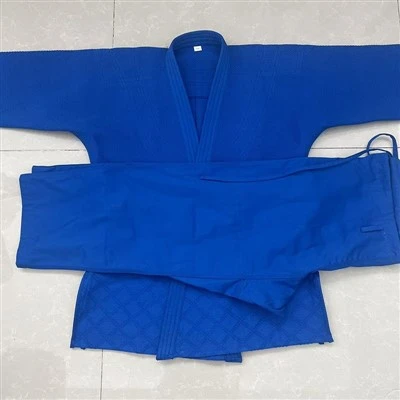
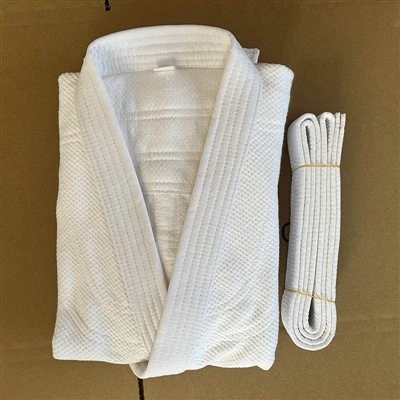
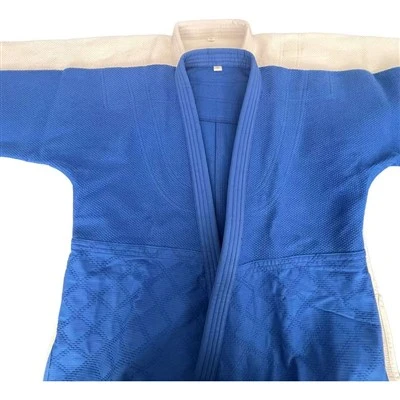
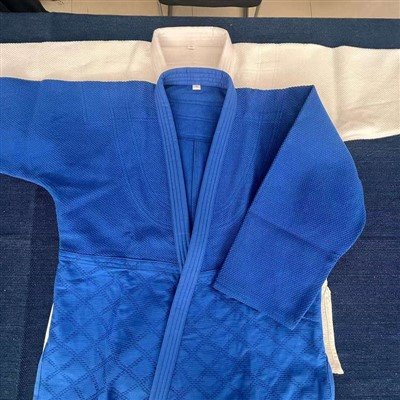
Karate uniforms usually consist of a top (Uwagi), pants (Zubon) and a belt (Obi). The top is a loose cross-collar design, while the pants are straight-cut to ensure flexibility. The color of the belt represents the practitioner's rank, ranging from white (beginner) to black (high rank).
When wearing, it is necessary to pay attention to the fact that the bottom of the top should be neatly tucked into the waistband of the pants, and the belt should be tied tightly and centered to show respect for martial arts. Some competitions or performances may require specific styles of gis, such as traditional Japanese or modern modified versions, so the purpose must be clearly stated when purchasing.
Daily maintenance of gis
Proper maintenance can significantly extend the service life of gis. After each training, it is recommended to wash the gi in time to avoid sweat stains and dirt accumulation. When washing, it is advisable to wash by hand in cold water or use the gentle mode of machine washing, and hang to dry to avoid fading due to exposure to the sun. When storing, they need to be stacked neatly to avoid deformation caused by heavy pressure.
For foreign trade companies, providing clear maintenance guidelines can not only improve customer satisfaction, but also reduce after-sales problems. In addition, regularly launching new uniforms or environmentally friendly materials can also meet the market's demand for innovation and sustainable development.
By understanding the materials, styles and maintenance methods of karate uniforms, users can choose and use uniforms more professionally, while providing strong support for the expansion of foreign trade business.