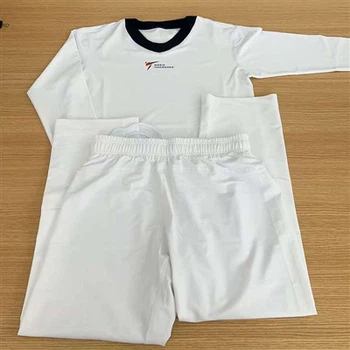
As the core equipment of fighting sports such as Brazilian Jiu-Jitsu and Judo, the design and function of Jiu-Jitsu uniforms have evolved over a century and have become a carrier of competitive performance and cultural heritage. In recent years, with the global promotion of mixed martial arts, the market demand for Jiu-Jitsu uniforms has increased significantly, especially in the European, American and Asian markets, showing a trend of specialization and segmentation.
In terms of materials, modern Jiu-Jitsu uniforms are mostly made of high-density cotton blended fabrics, which are both wear-resistant and breathable. The surface is treated with a special washing process to avoid excessive friction during training and to adapt to the stretching needs in high-intensity confrontation. Some high-end products introduce antibacterial coating technology to solve the problem of sweat residue after exercise and extend the service life of clothing. It is worth noting that the tailoring of Jiu-Jitsu uniforms emphasizes the freedom of limb movement, and the back is usually designed with cross straps to ensure fit and avoid a sense of restraint.
The evolution of colors and patterns reflects the diversity of Jiu-Jitsu culture. Traditional jiu-jitsu uniforms are mainly black and white, symbolizing the purity of competition; while contemporary designs incorporate regional cultural elements, such as the colors of the Brazilian flag and Japanese family crests. Some brands have launched customizable embroidery services, allowing athletes to add personal logos to their cuffs or collars. This personalized trend is particularly evident in the foreign trade market.
From an industry perspective, the export standards for jiu-jitsu uniforms are gradually improving. Organizations such as the International Jiu-Jitsu Federation (IBJJF) have clear regulations on the color fastness and seam strength of competition clothing, pushing manufacturers to adopt a stricter quality inspection system. The penetration of environmental protection concepts has also prompted some manufacturers to develop organic cotton versions to meet the needs of the European and American markets for sustainable sports equipment.
With the rise of e-sports and virtual training equipment, jiu-jitsu uniform manufacturers have begun to explore digital application scenarios. Some brands have tried to embed sensors in clothing for motion capture and posture analysis, which may redefine the development direction of future combat training equipment. For foreign trade practitioners, grasping the balance between functional innovation and cultural symbols will become a key strategy for opening up international markets.