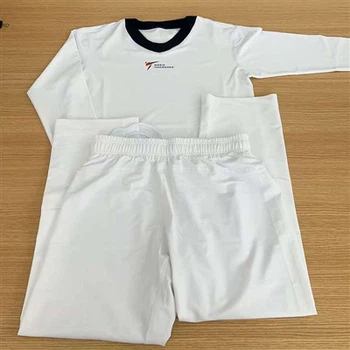
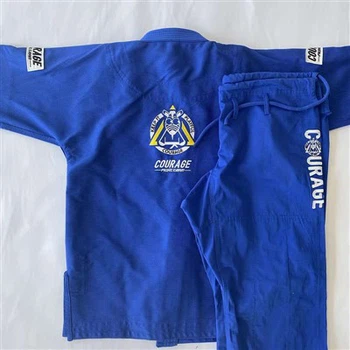
As a globally popular martial arts sport, karate's uniforms (gi) are not only a symbol of identity for practitioners, but also directly affect the training experience and sports performance. The material selection of the uniform is directly related to durability, comfort and breathability, so it is particularly important for consumers and foreign trade practitioners to understand its main materials.
The main materials of karate uniforms usually include cotton, polyester fiber and blended fabrics of the two. Among them, pure cotton material is the most traditional and widely used choice. Pure cotton uniforms are favored by beginners for their excellent moisture absorption and soft touch, especially suitable for low-intensity training. However, the disadvantage of pure cotton is that it is easy to shrink and deform, and may become hard after frequent washing, so high-end uniforms often use high-count cotton yarn to improve durability.
In recent years, polyester fiber and its blended fabrics have gradually become the mainstream choice for mid-to-high-end uniforms. Polyester fiber has excellent wrinkle resistance and quick drying properties, which can effectively reduce the discomfort of sweat retention after training. Blended fabrics (such as cotton-polyester blends) combine the comfort of cotton with the durability of polyester, becoming the first choice for many professional gyms. This type of material not only reduces the shrinkage rate of the uniform, but also enhances the tear resistance, making it suitable for high-intensity training and competition scenarios.
In addition, some high-end karate uniforms use special functional fabrics, such as adding breathable mesh or antibacterial coatings. These innovative materials can further improve perspiration efficiency and reduce odor growth, meeting the needs of professional players and frequent trainers. Under the environmental protection trend, some brands have also begun to explore the use of organic cotton or recycled fibers to reduce the environmental impact of the production process.
For foreign trade practitioners, understanding the differences in uniform materials can help accurately locate market demand. For example, the European and American markets prefer durable and easy-to-care blended fabrics, while the Asian market has a higher acceptance of traditional pure cotton materials. By providing material options that meet regional preferences, companies can expand international markets more effectively.
In short, the material selection of karate uniforms needs to balance comfort, durability and functionality. With the advancement of technology and the upgrading of consumer demand, the materials of gis will develop in the direction of being lighter and more environmentally friendly in the future, providing better choices for karate enthusiasts around the world.