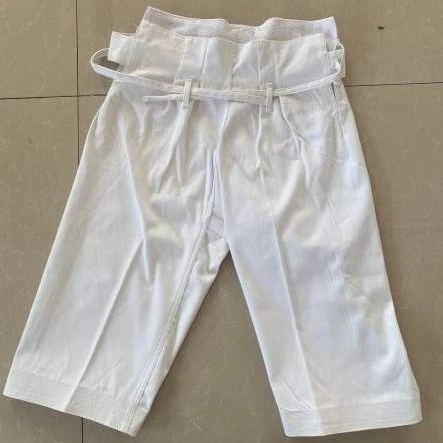
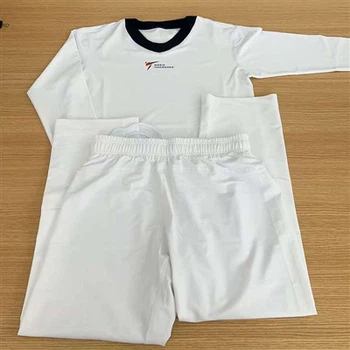
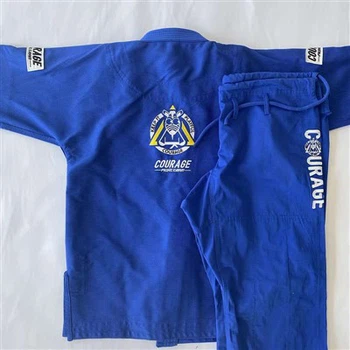
Karate is a martial arts sport originated in Japan. Its uniforms (gis) are not only a symbol of identity for practitioners, but also play an important role in training, competition and cultural heritage. With the international development of karate, the design and materials of uniforms are constantly optimized to meet the needs of different environments. This article will analyze the applicability and functional characteristics of karate uniforms from three scenarios: training, competition and cultural activities.
In daily training, karate uniforms need to have good breathability and durability. Since the training process involves a lot of high-intensity movements such as kicking and punching, uniforms are usually made of lightweight cotton or blended fabrics to ensure sweat absorption and quick drying, reducing the sense of restraint during exercise. In addition, the loose design of the uniform is not only convenient for limb stretching, but also prevents clothing from being torn due to excessive movements. Some high-end uniforms will also reinforce the stitching at the collar, cuffs and other easily worn parts to extend the service life.
The competition environment has more stringent requirements for karate uniforms. Authoritative organizations such as the World Karate Federation (WKF) have clear regulations on the size, color and material of competition uniforms. For example, uniforms must be pure white and must not have any decorative patterns to ensure that the referee can clearly observe the movements of the players. At the same time, competition uniforms usually use higher density fabrics to reduce deformation or damage caused by fierce confrontation. Some players also choose uniforms with slight anti-wear treatment to cope with friction during wrestling or ground fighting.
In cultural activities or performances, karate uniforms pay more attention to ritual and visual effects. Some traditional schools will add school logos or badges to the uniforms to reflect cultural heritage. In addition, some performance uniforms will use special fabrics or embroidery techniques to enhance stage performance. Although this type of uniform is slightly less functional, it plays an important role in cultural communication.
In short, the design of karate uniforms must take into account practicality, standardization and culturality to adapt to diverse environments such as training, competitions and cultural activities. With the advancement of material technology, modern gis have made continuous breakthroughs in functionality, providing better choices for karate enthusiasts around the world.