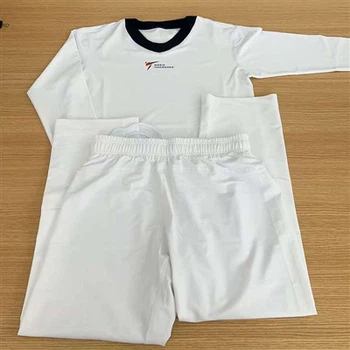
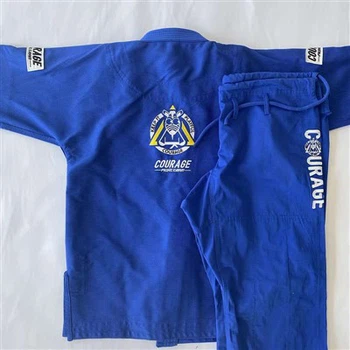
Karate is a martial arts sport originated in Japan. Its uniforms (gi) are not only a symbol of identity for practitioners, but also reflect the characteristics of different schools, ranks and training stages. Understanding the differences in karate uniforms can help enthusiasts better choose equipment that suits them, and can also help foreign trade practitioners grasp market demand more accurately.
Basic structure of gis
Karate uniforms usually consist of three parts: tops (Uwagi), pants (Zubon) and belts (Obi). Tops are generally loose cotton or blended fabrics for easy movement; pants are loose to ensure flexibility when kicking and moving; belts represent the practitioner's rank, ranging from white to black, and some schools use other colors to distinguish the primary level.
Differences in uniforms of different schools
Karate is mainly divided into traditional schools and modern competitive schools. Uniforms of different schools differ in tailoring, materials and details.
Traditional schools (such as Shotokan-ryu and Goju-ryu)
Traditional schools usually have looser uniforms, longer tops, and wider sleeves and trouser legs to accommodate the kicking and blocking movements of traditional karate. Some schools use unique lacing methods on the front of the top, such as a "V" neckline or cross-lacing to enhance stability.
Competitive schools (such as Kyokushinkai and WKF rules)
Competitive karate uniforms focus more on lightness and flexibility. The tops are usually shorter, and the sleeves and trouser legs are narrower to reduce air resistance and facilitate fast movement. Some competitive uniforms use high-density fabrics to improve wear resistance and adapt to high-intensity confrontation.
The difference between rank and belt
The color of the karate belt is an important symbol to distinguish the rank. Beginners usually wear white belts, and as their skills improve, they gradually advance to yellow, orange, green, blue, brown, and finally black. Some schools also subdivide the black belt into different levels, such as red and black belt or gold belt, to distinguish higher-level ranks.
Uniform demand in the foreign trade market
In the foreign trade field, the demand for karate uniforms varies by region and school. The Asian market prefers traditional styles of gis, while the European and American markets prefer lightweight designs of competitive styles. Understanding these differences can help companies accurately position their products to meet the needs of different customers.
In short, the difference between karate uniforms is not only reflected in appearance, but also reflects the differences in school culture and training methods. Whether it is traditional or modern style, choosing the right uniform can enhance the practice experience and provide more business opportunities for foreign trade business.