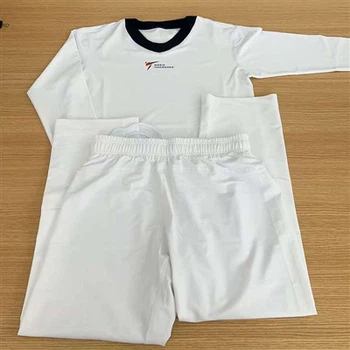
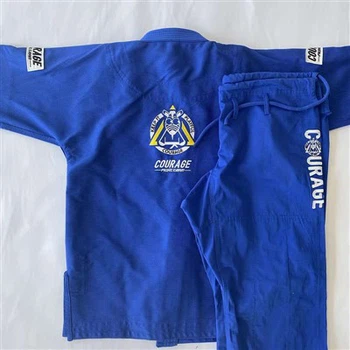
Karate, as a martial arts sport originated in Ryukyu, not only emphasizes combat skills, but also pays attention to the inheritance of etiquette and spirit. As a symbol of the identity of the practitioner, the wearing and maintenance skills of karate uniforms (dogi) also contain profound cultural connotations. For foreign trade practitioners, understanding the relevant knowledge of karate uniforms will help expand the international market for related products, especially for karate enthusiasts in Asia and Europe and the United States.
First of all, the basic structure of karate uniforms includes tops (Uwagi), pants (Zubon) and belts (Obi). Tops are usually loose-fitting for easy movement, while pants focus on durability and comfort. The belt is not only a symbol of the grade, but also has certain specifications for its tying method. The correct tying method can not only reflect the rigorous attitude of the practitioner, but also avoid looseness during training to affect the movement.
In terms of wearing skills, karate uniforms require neatness and correctness. The top should completely cover the waist, and the cuffs are usually located about 5 cm above the wrist. Pants should be loose but not too big, and the hem should generally be above the ankle. The belt should be tied flatly around the waist, with both ends of equal length and the ends hanging naturally. These details are not only about the image, but also reflect respect for the spirit of karate.
It is equally important to maintain karate uniforms. Due to frequent sweating and friction during training, uniforms are prone to wear and tear. It is recommended to wash them promptly after each training session to avoid long-term sweat stains that cause the fabric to harden or fade. When washing, it is advisable to use mild detergents and avoid bleaching agents to avoid damaging the fibers. When drying, avoid exposure to the sun to prevent color fading. Regularly check the stitching of the uniform and repair the damage in time to extend the service life.
For foreign trade companies, understanding the cultural background and practical skills of karate uniforms can help meet customer needs more accurately. Whether it is bulk purchases for karate halls or retail needs of individual practitioners, providing high-quality uniform products that meet international standards will help enhance brand competitiveness. At the same time, combined with the international development trend of karate, promoting environmentally friendly and durable uniform materials can also attract more consumers who focus on sustainable development.
Karate uniforms are not only training equipment, but also a carrier of culture. Mastering the wearing and maintenance skills can not only enhance the experience of practitioners, but also provide new ideas for the foreign trade industry to open up the market.